A teleprompter is only as good as the script you put into it. A poorly prepared text imports badly, confuses speech recognition, and comes back to bite you at rehearsal. The good news: preparation takes a few minutes and catches most problems in advance. Here's an approach that works.
Start with the cleanest text you can
Exports from Word — and especially from PDF — carry baggage: page numbers, headers, footers, watermarks, words split across line breaks. Before you import the script, go through it and strip that baggage out. The cleaner the input, the fewer surprises later. With PDFs, check that you have actual text and not a scanned image — a scan has to be converted to text first.
Make role and line formatting consistent
Both recognition and your own navigation rise and fall on consistency. If a character's name appears once in capitals, once with a colon, and once in italics, software and people alike lose track. Pick one format for character names and keep it across the whole document.
Separate stage directions from lines
Directorial notes, blocking, lighting cues — these aren't what the actor says out loud, and recognition shouldn't try to "lock on" to them. Set them apart visually (parentheses, italics, a line of their own) so it's clear what's spoken and what's a note.
Check diacritics and proper nouns
Invented character names, foreign words, and archaisms are exactly where recognition stumbles most. Go through them, confirm the correct spelling, and make it consistent. The more precisely the text matches what's said on stage, the better spoken delivery aligns to it.
Do a trial import
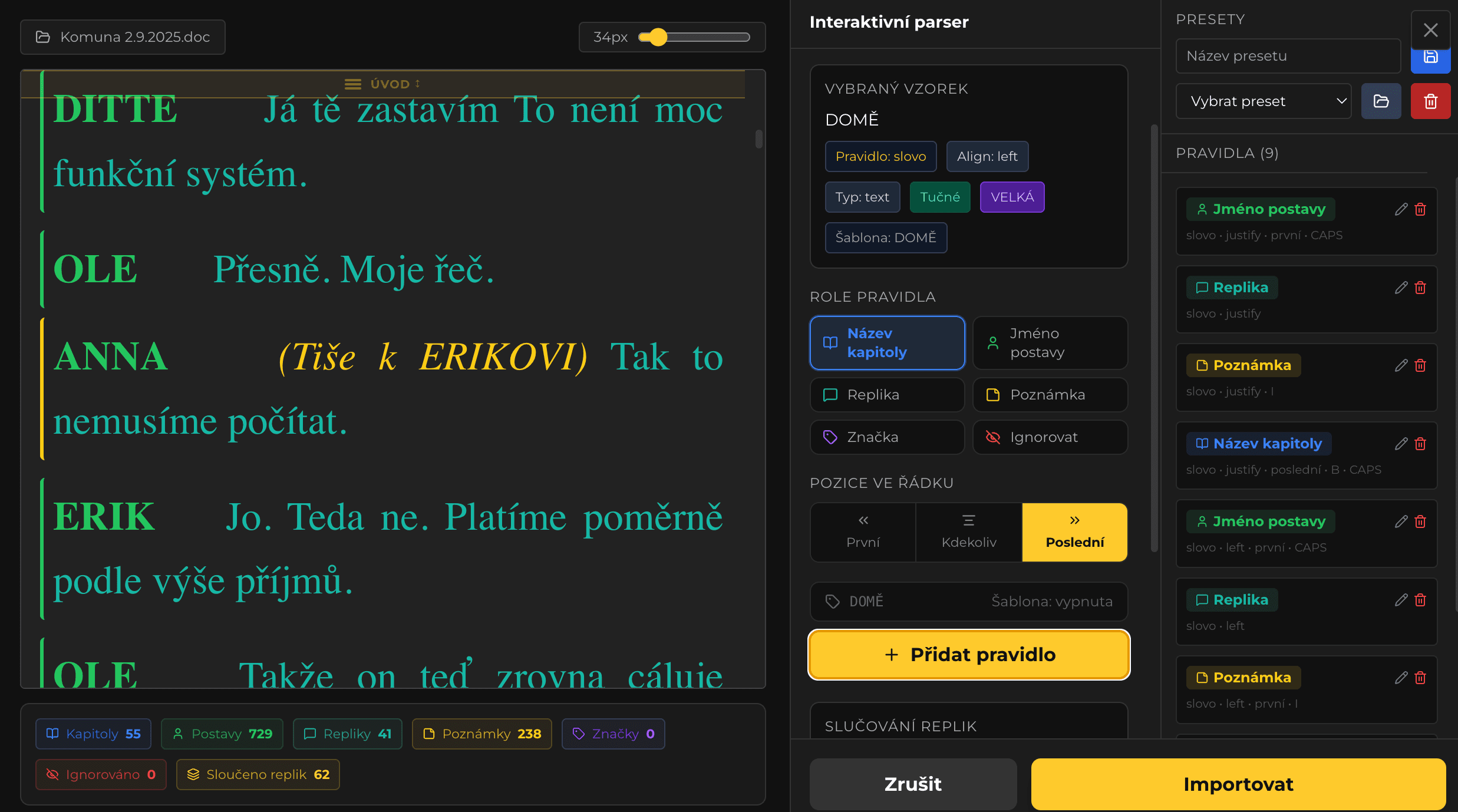
Before you rely on the live script, try a dry-run import. Theatre Prompter imports the script and shows you straight away how it broke down into lines and roles. Any errors — merged lines, misplaced notes — you fix calmly, not five minutes before rehearsal.
In short
Preparing the script isn't a delay, it's an investment that pays off every run. Clean text, uniform role formatting, separated notes, and a name check — those four steps turn the teleprompter into a reliable helper instead of a source of stress. And once you've done a trial import, nothing will surprise you on opening night.